Middle School Life Science Worksheets (Grades 6-8)
This hub collects our life science worksheets for Grades 6-8 in the order used on this site: the scientific method first (variables, fair tests, repeated trials and conclusions), then human body systems, then photosynthesis and respiration, then food webs. Each topic page has a free one-page sample you can print today, pictures of the real student pages, and a plain list of what is in the paid unit on TPT. Each page states its standards connection in the unit's own words, without claiming full alignment.
The human body systems page also links a one-day sub plan on the same four systems. The store's life science line for Grades 6-8 also covers cell structure, sensory signals, the carbon cycle, ecosystem limits, symbiosis, succession, biodiversity, reproduction and growth, inheritance and variation, natural and artificial selection, and fossil evidence of relatedness. Worksheet pages with free samples for these topics are being added to the site; until they are here, the units are listed in the PENCILFINCH store on TPT.
Worksheets in teaching order
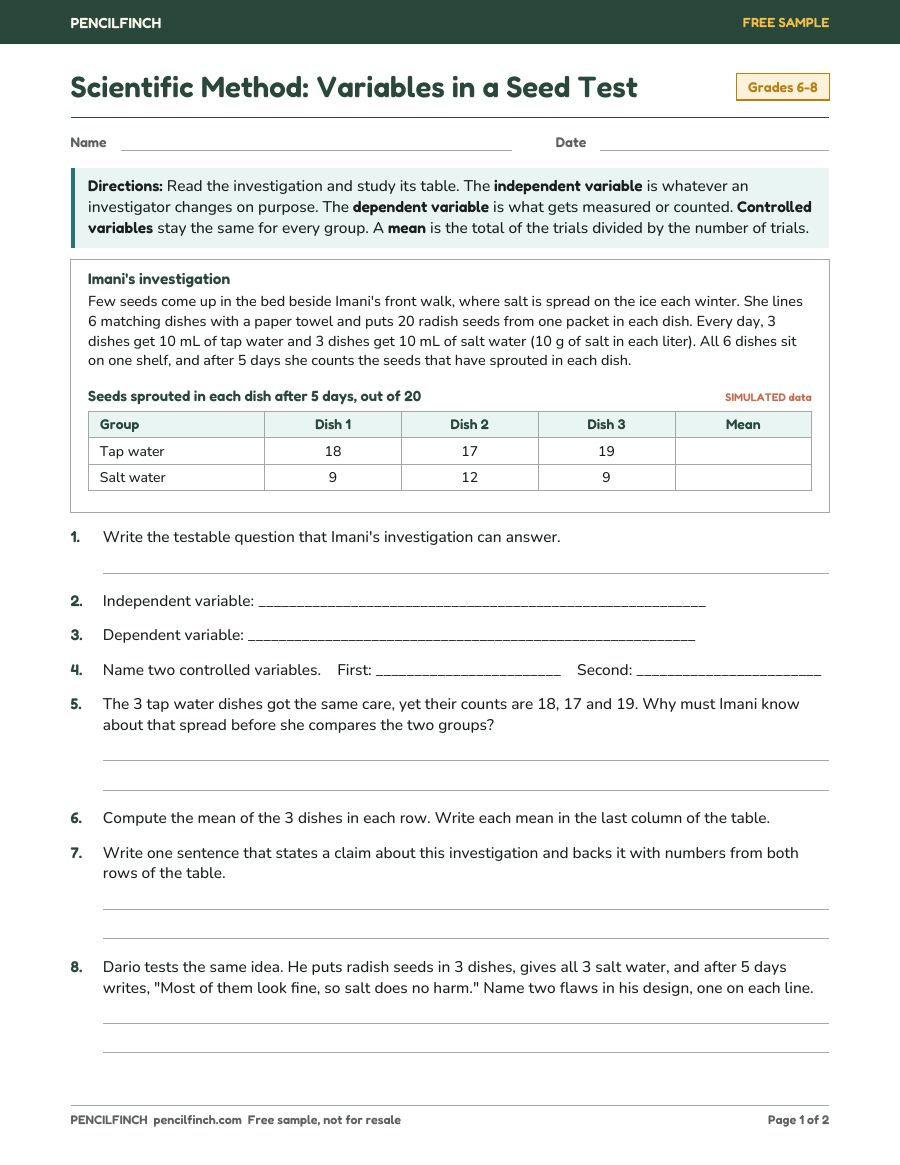 Scientific Method Worksheets for Grades 6-8 (Free Sample + Full Unit)
Free printable scientific method worksheet for middle school with answer key, plus a two-lesson unit on variables, fair tests, repeated trials and CER.
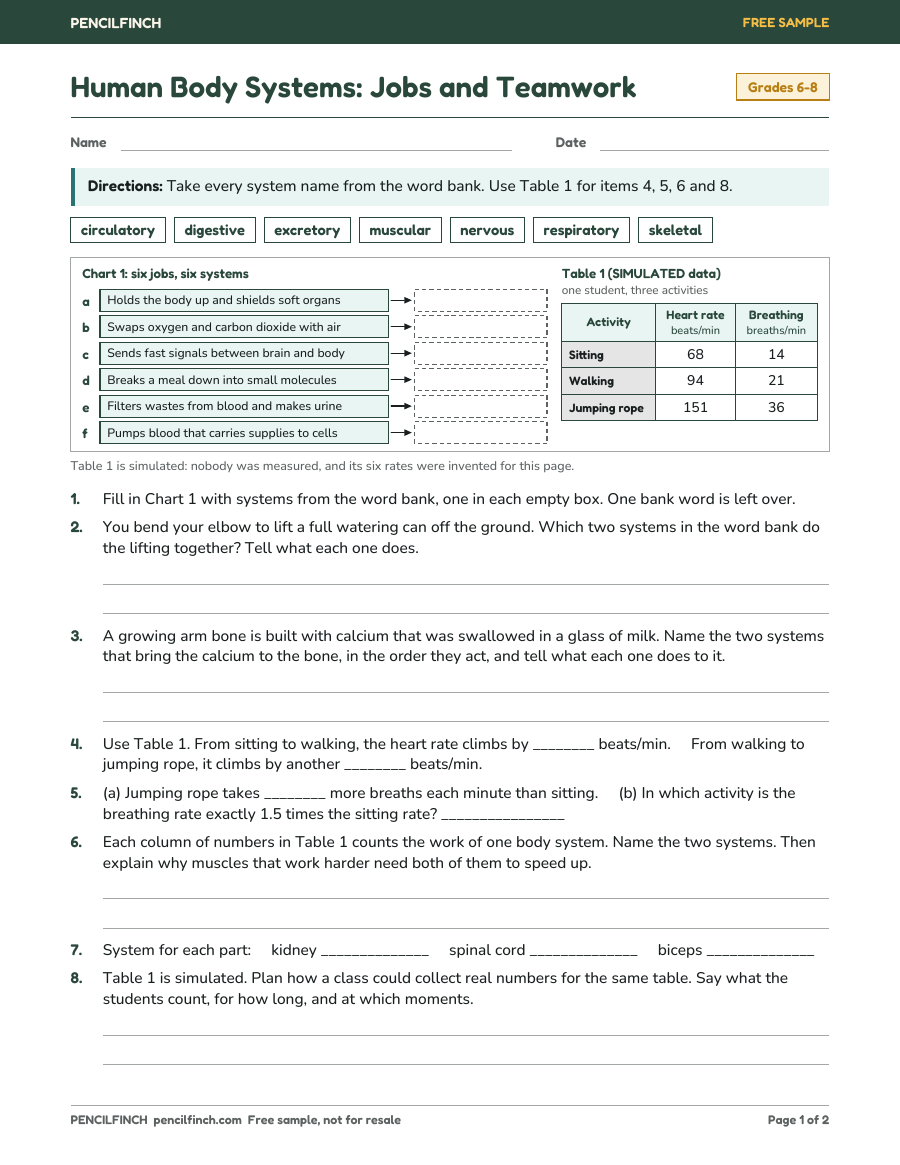 Human Body Systems Worksheets, Grades 6-8 (Free Sample + Full Unit)
Free printable human body systems worksheet for middle school with answer key, plus a two-lesson unit on how four body systems interact, with data tasks.
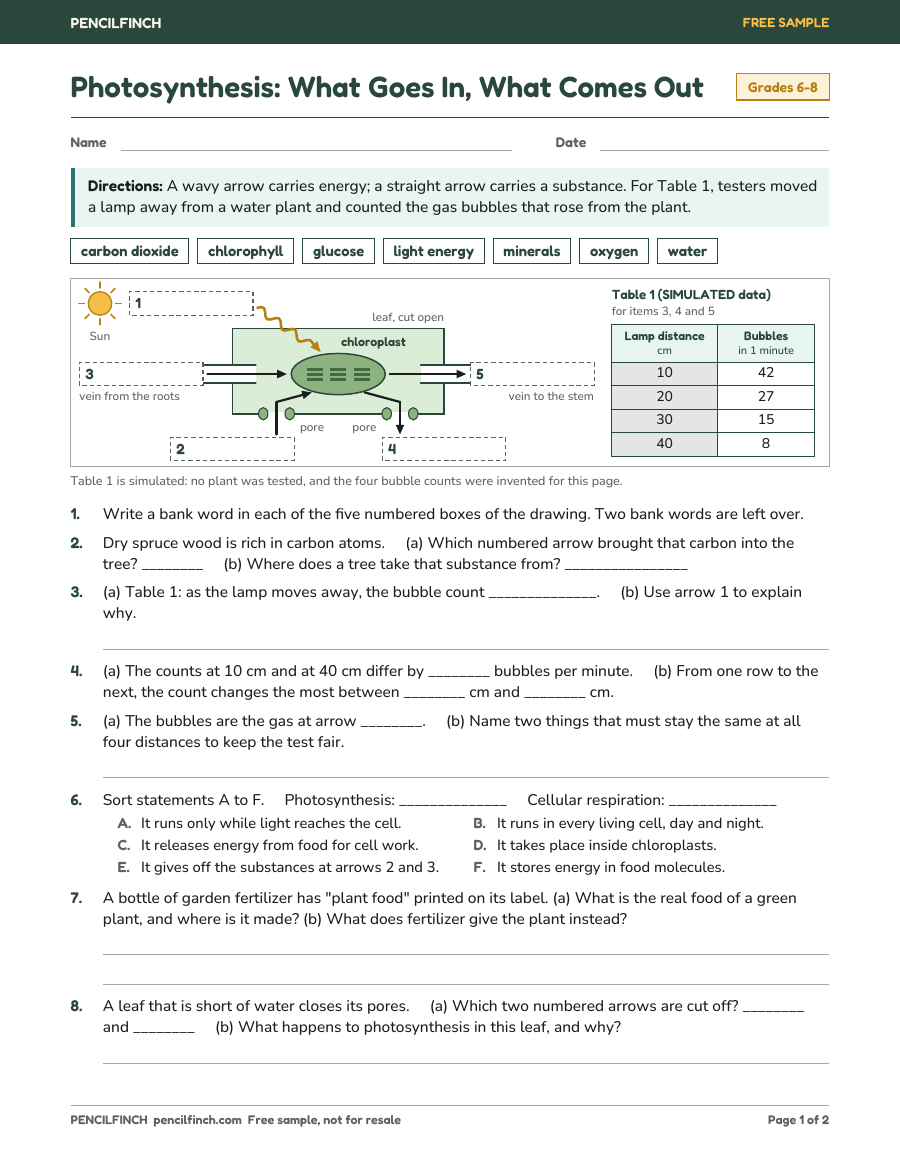 Photosynthesis Worksheets for Grades 6-8 (Free Sample + Full Unit)
Free printable photosynthesis worksheet for middle school with answer key, plus a two-lesson unit on photosynthesis, respiration, carbon and evidence.
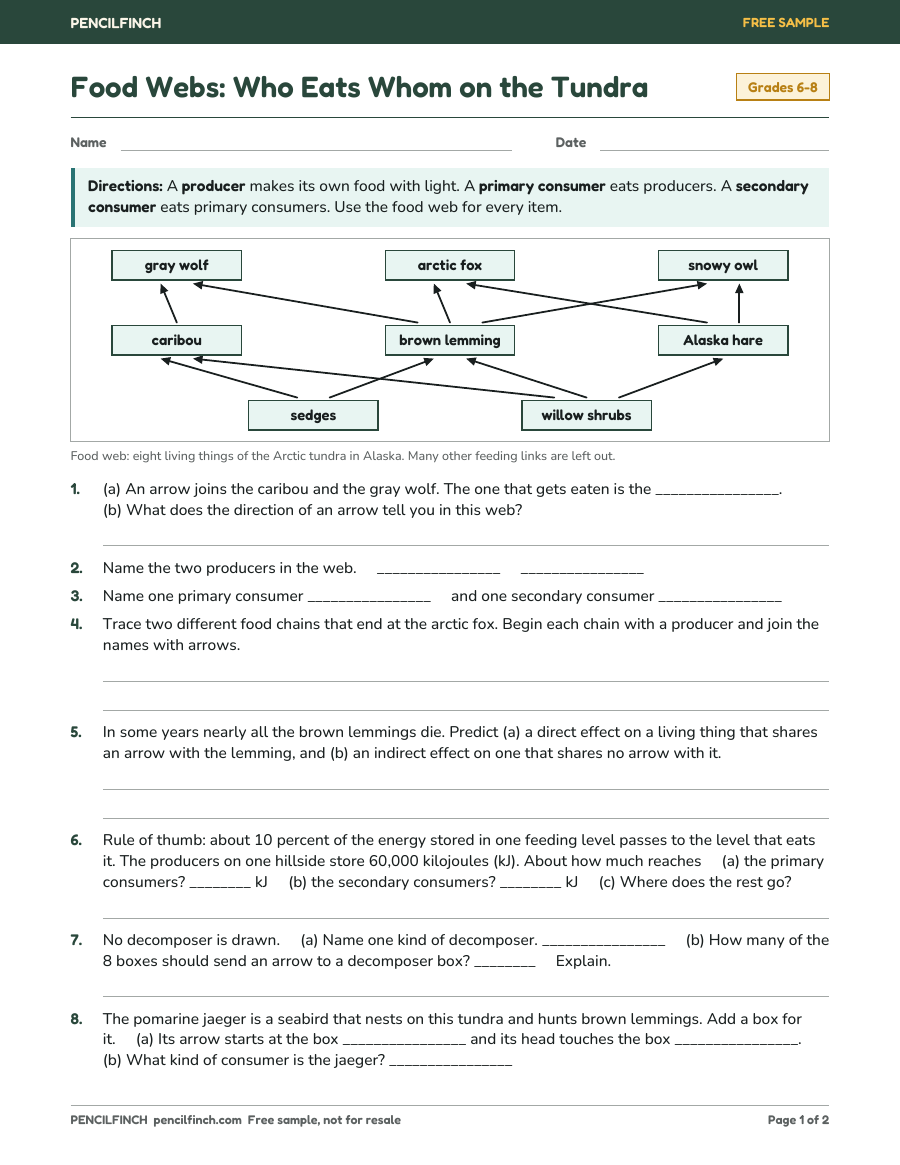 Food Webs Worksheets for Grades 6-8 (Free Sample + Full Unit)
Free printable food web worksheet for middle school with answer key, plus a two-lesson unit on food webs, energy flow, matter cycling and ecosystem change.
Formats in this line
- Illustrated lessons: two lessons of 45 to 50 minutes per topic with explanation pages, guided notes, model and data tasks, picture vocabulary cards, an exit check or quiz and a full answer key
- Sub plans: one-day, no-prep packets with a one-page script for the substitute (body systems)