Weather and Climate Worksheets for Grade 3 (Free Sample + Full Unit)
Download a free weather and climate worksheet for Grade 3 below: one student page with an answer key, ready to print. The full unit is two illustrated lessons, one on weather and seasons and one on climates and hazards, with short Read It passages, Word Cards, cut-and-paste sorts, a Label It page, two Try It investigations, a season wheel to build, a climate detective game and Check It pages, for USD 4.50 on TPT. A one-day weather and climate sub plan is sold separately for USD 4.50.
Free sample worksheet
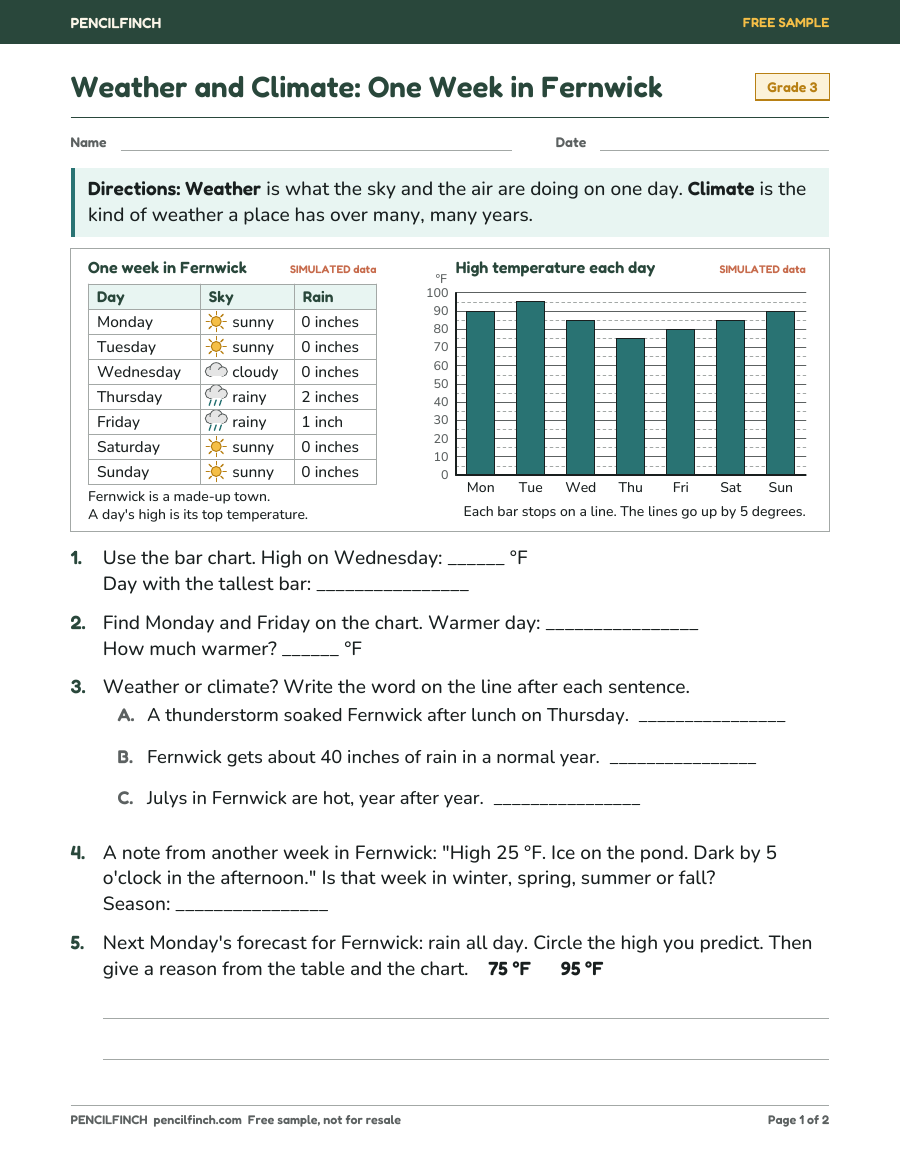 Download the free sample (PDF, 5 items with answer key)
Free to download, no email needed. These problems are not in the paid unit.
What is in the full unit
| Full unit | Weather and Climate 3rd Grade Science Lessons | Seasons & Climate Data | Grade 3 |
|---|---|
| Pages | 30 pages in one PDF |
| Answer key | Included with Rubric |
| Standards | Supports and connects to NGSS 3-ESS2-1, 3-ESS2-2 and 3-ESS3-1 (not a claim of full alignment) |
| Grade | 3 |
| Price on TPT | USD 4.50 |
Get the full unit on TPT (USD 4.50)
- Lesson 1, weather and seasons: weather, temperature, precipitation and wind; the thermometer, rain gauge and wind vane (and why a north wind blows toward the south); the four seasons and averages. Students sort 9 tool cards, read three weather tools, find out how little water a cup of fluffy snow makes, build a season wheel with real Chicago averages and read a real precipitation pictograph.
- Lesson 2, climates and hazards: weather vs. climate; desert, tropical, cold and temperate climates in different regions; floods, strong winds and lightning and the designs that make damage smaller. Students sort 10 weather-or-climate cards, use a climate finder on four real mystery places, test which model roof stays on in a fan (simulated class results) and compare real Hilo and Phoenix data.
- Read It pages in three or four short chunks, two Word Cards pages (12 words) and bold-outline pictures to color. The coloring pictures are line drawings made in code; no AI image generator was used.
- Real data: NOAA 1991–2020 climate normals for Chicago, Phoenix, Nome, Hilo and four mystery places. All numbers are whole numbers, and the graphs are bar graphs and a pictograph. The roof fan test is simulated and says so.
- Answer key for every question with filled sort mats, labeled diagrams and sample answers; a two-lesson plan with a prep and materials list, safety, misconceptions, scoring and data notes for the teacher.
Goes with
-
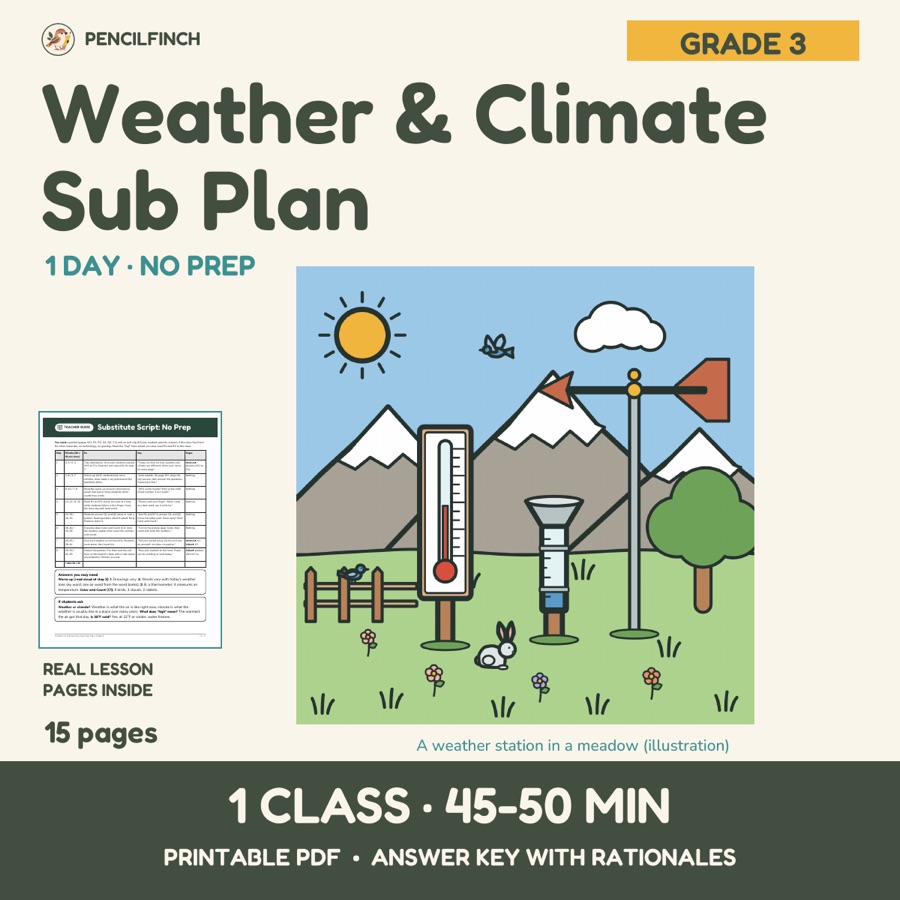
Weather & Climate 3rd Grade Science Sub Plan | One Day, No Prep | Grade 3
Companion. 15 pages, grade 3, answer key included. USD 4.50
View on TPT
Pages from the unit
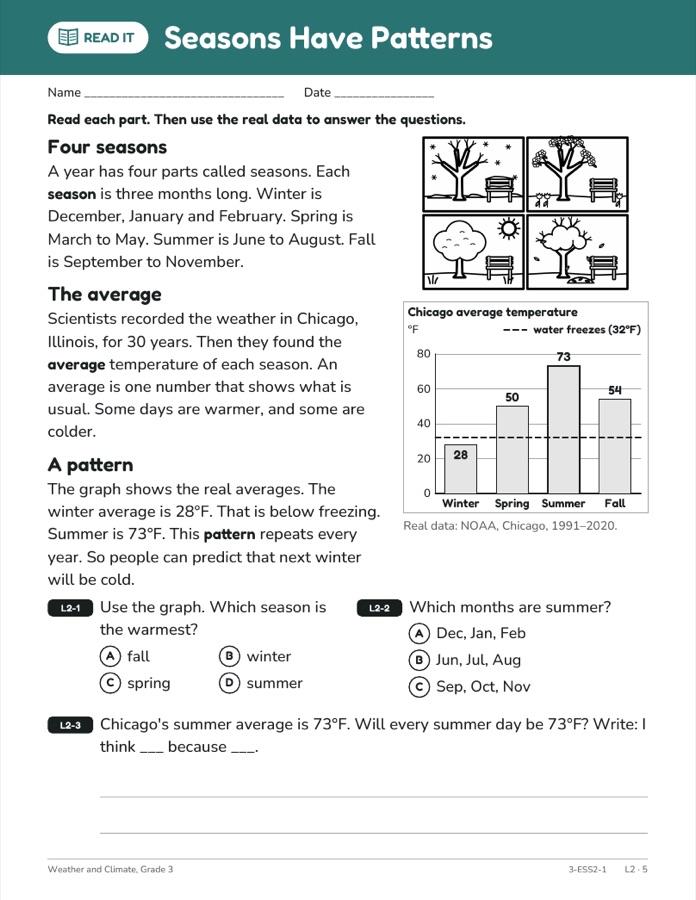
Page 5 of 30 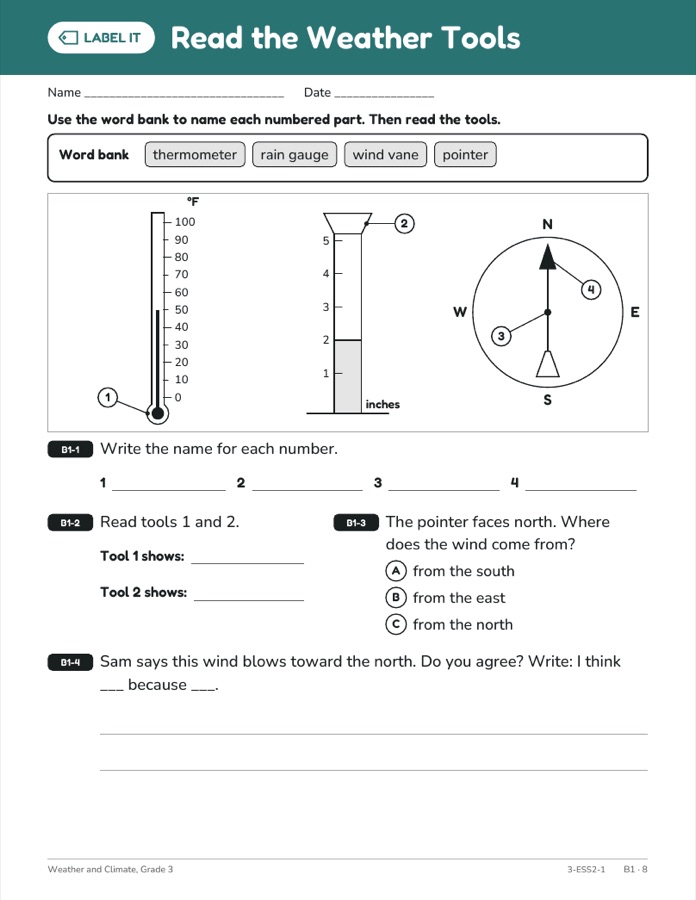
Page 8 of 30 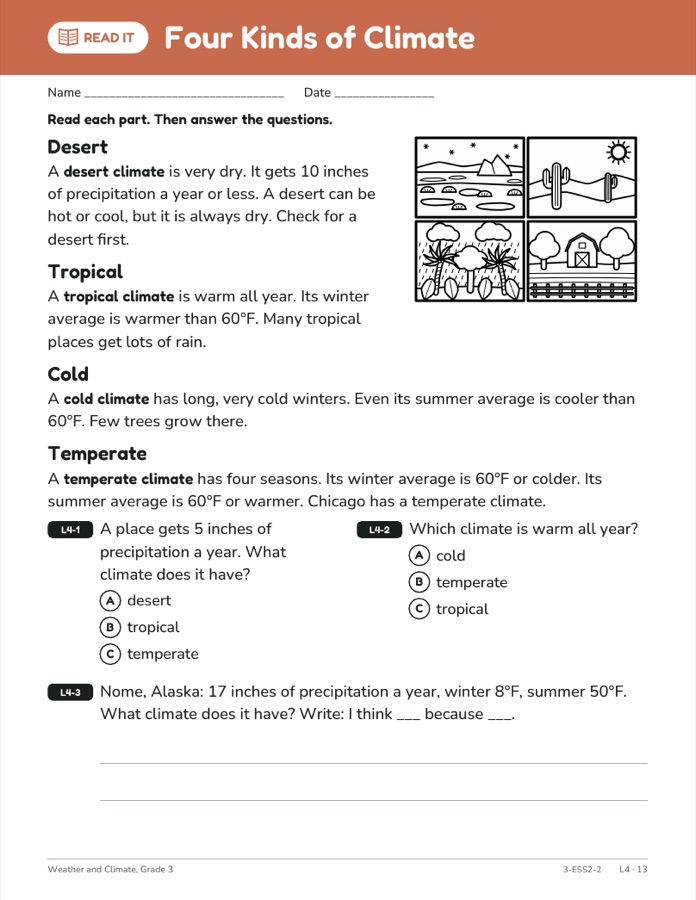
Page 13 of 30
Student pages are black and white except a colored page header, so they print on any printer. The type is large Grade 3 type (14 pt) with writing space under each written question.
How teachers use it
Weather is what the air is like at one place and one time, and climate is the usual weather of a place over many years. Each lesson is planned over two sessions of about 45 minutes. Students hear or read the Read It pages in short chunks and answer together, then cut, color and sort, label the weather tools, run a Try It investigation and finish with a Check It page.
The free sample on this page is a one-page practice sheet on weather and climate with an answer key. Its items are new and are not in the paid unit, so you can use it as a warm-up before the unit or a quick review after it and still teach the full lessons.
The unit takes on ideas third graders often mix up. A north wind comes from the north, so it blows toward the south. An average is one number that shows what is usual, not the temperature of every day. A snowy season is not always the season with the most precipitation: students melt a cup of fluffy snow and see how little water it makes. In Lesson 2 they sort real places into four kinds of climate with a simple rule based on yearly precipitation and average winter and summer temperatures. The teacher pages say this climate finder is a simplified sorting rule for Grade 3, not an official classification.
You will need scissors, glue sticks, crayons and one brad (paper fastener) per student, plus clear cups with fluffy snow or shaved ice for the snow investigation. The unit supports and connects to NGSS 3-ESS2-1 (weather data by season in tables and graphs), 3-ESS2-2 (climates in different regions) and 3-ESS3-1 (a claim about a design that reduces a weather hazard). That is not a claim of full alignment.
Before and after this topic
In the order used on this site, this is the first elementary science page, and life cycles for Grade 3 comes next. The sub plan listed above fits one class period and uses different places, data, text and questions (a real Denver week and three cities), with no scissors or glue.
- After this topicLife Cycles Worksheets for Grade 3 (Free Sample + Full Unit)
- All topics in this lineElementary Science and Social Studies Worksheets (Grades 2-5)
Common questions
Is the free worksheet the same as a page from the paid unit?
No. The sample is written separately for this site, and its items are not in the unit. It uses the same page style, so you can see what the student pages look like before you buy.
What if we have no snow for the snow cup investigation?
Use shaved ice. The materials list names shaved ice as the substitute for fluffy snow, and the teacher pages note that it melts into more water than fluffy snow does, but the water line still ends up well below the top of the cup. They also say the snow takes about an hour to melt indoors, so start it early in the session.
Does the unit teach climate change or why we have seasons?
No. The teacher pages list climate change and the causes of seasons as not taught. The unit stays with what Grade 3 students can read from data: the weather of each season, the difference between weather and climate, four kinds of climate in different regions, and designs that make weather damage smaller.