Plus-que-parfait Worksheets for French 3 (Free Sample + Pack)
Download one free plus-que-parfait worksheet for French 3 (student page and answer key, no sign-up). The full pack, Le plus-que-parfait, is one PDF of 17 pages with five student pages in French, the same five with English directions, and one answer key for both, for USD 2.50 on TPT. A Quiz A/B companion checks the same forms and uses with two parallel one-page quizzes.
Teaching notesHow to Teach the French Plus-que-parfait (French 3)
Free sample worksheet
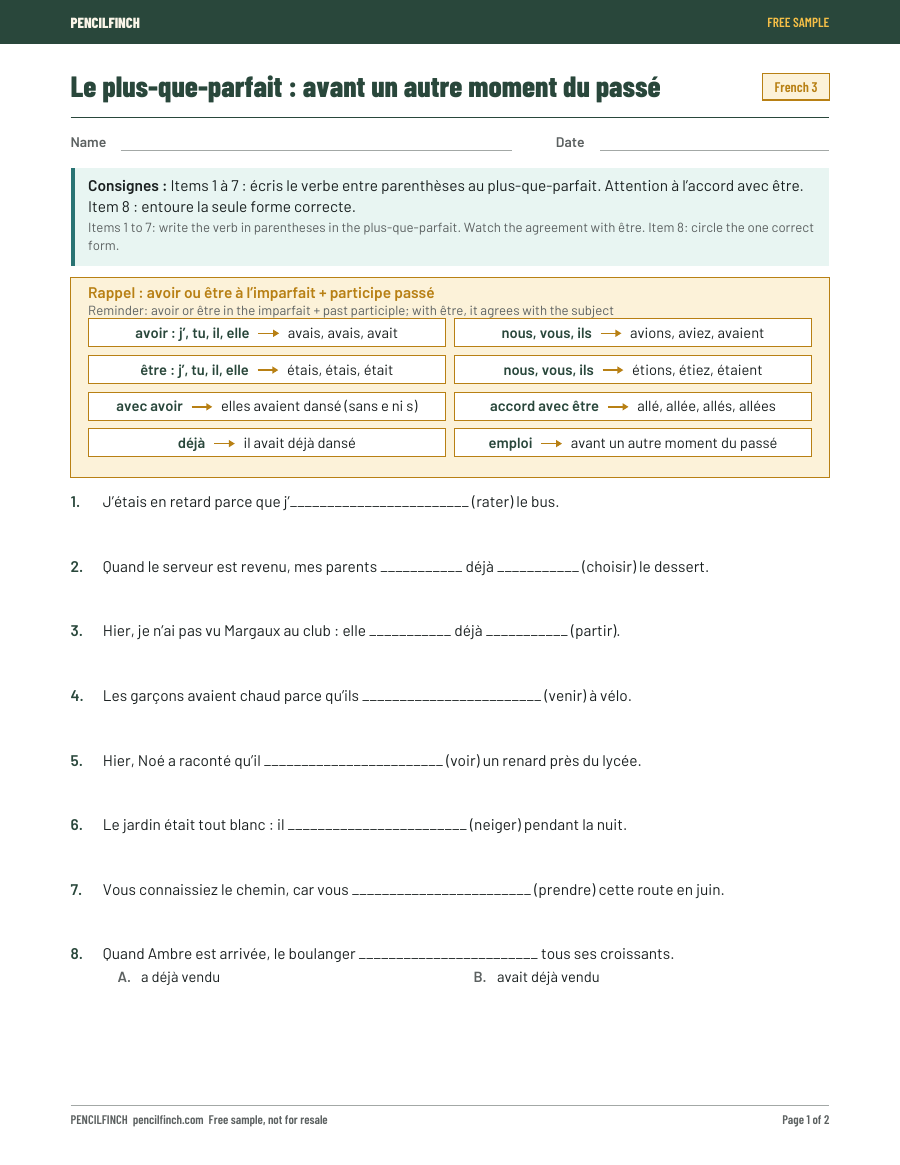 Download the free sample (PDF, 8 items with answer key)
Free to download, no email needed. These problems are not in the paid unit.
What is in the full unit
| Full unit | Le plus-que-parfait - French 3 Worksheets en français - Grades 9-12 |
|---|---|
| Pages | 17 pages in one PDF |
| Grades | 9-12 |
| Price on TPT | USD 2.50 |
Get the full unit on TPT (USD 2.50)
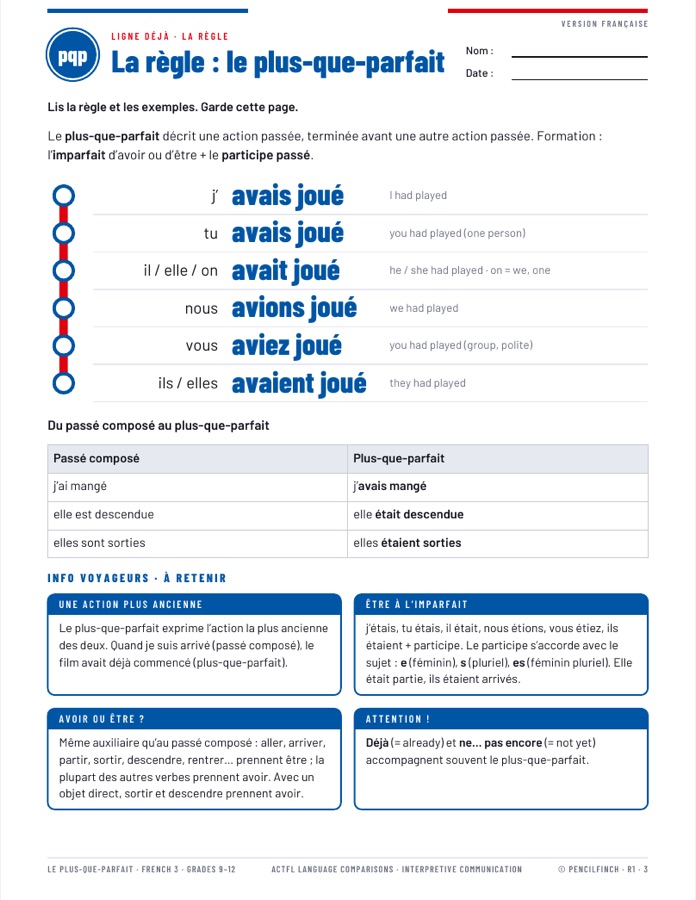
- A rule chart (R1) that builds the plus-que-parfait from the passé composé: jouer in six forms, a table that changes only the tense of the helping verb, and notes on the earlier action, être in the imparfait, avoir or être, and déjà.
- A conjugation grid for arriver, then seven fill-ins.
- Eight multiple-choice items: the plus-que-parfait against the passé composé and the imparfait, and agreement with être.
- A six-pair draw-a-line match (each subject to its helping verb and agreement), then three rewrites from the passé composé into the plus-que-parfait.
- Four English-to-French sentences and an eight-clue mystery code: when every form is right, the code spells a French phrase.
Every student page is printed twice, with French directions and then with English directions and English rule explanations, and one answer key serves both. Nothing is cut or glued. The Quiz A/B companion (12 pages) is a quiz in two parallel versions: a one-page Rappel to study from, then Quiz A and Quiz B with 13 items each, where item 1 of A tests the same skill as item 1 of B with a different verb and sentence, so you can alternate rows or keep B as a retake.
Goes with
-
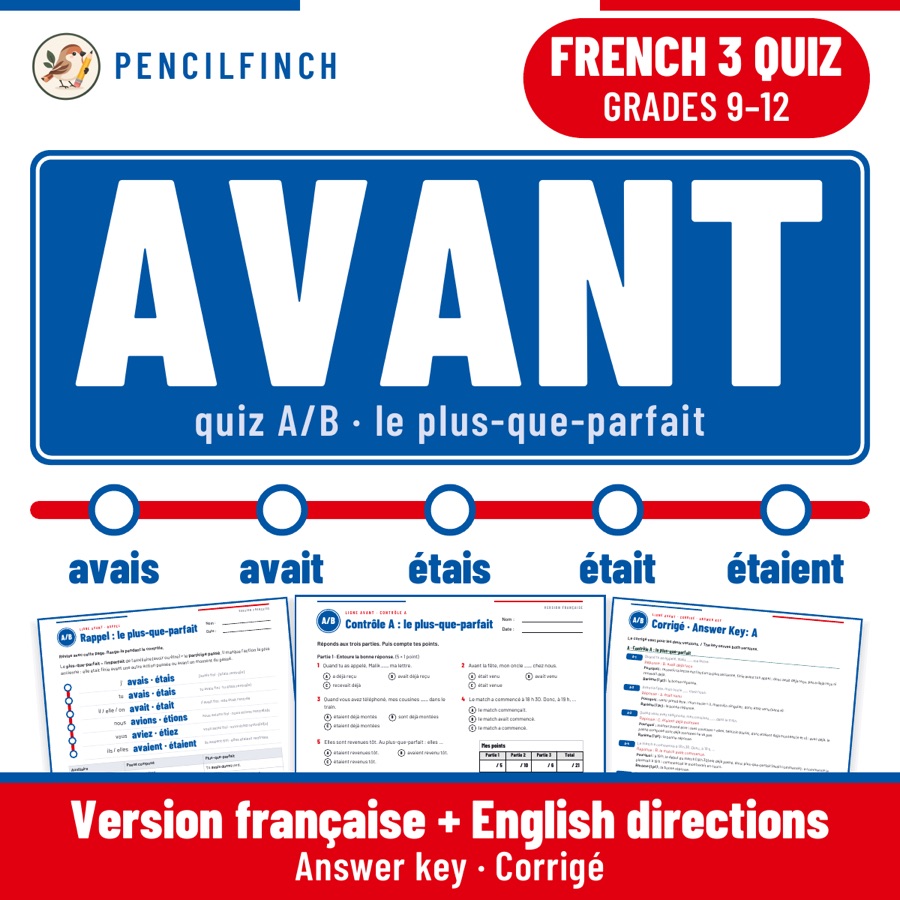
Le plus-que-parfait - French 3 Quiz A/B en français - Grades 9-12
Companion. 12 pages, grades 9-12, answer key included. USD 3.00
View on TPT
Pages from the unit
Page 3 of 17 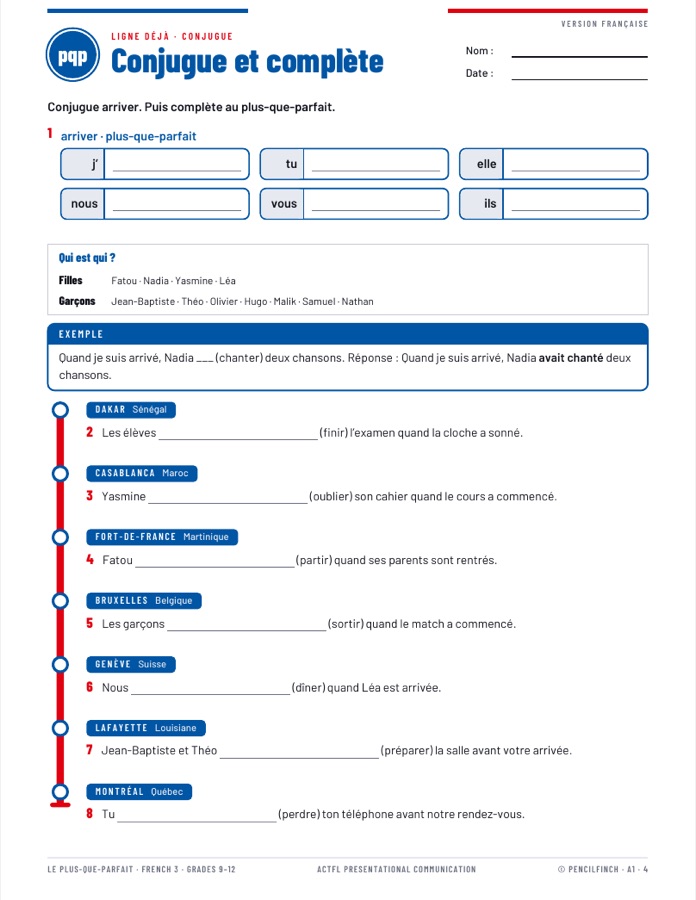
Page 4 of 17 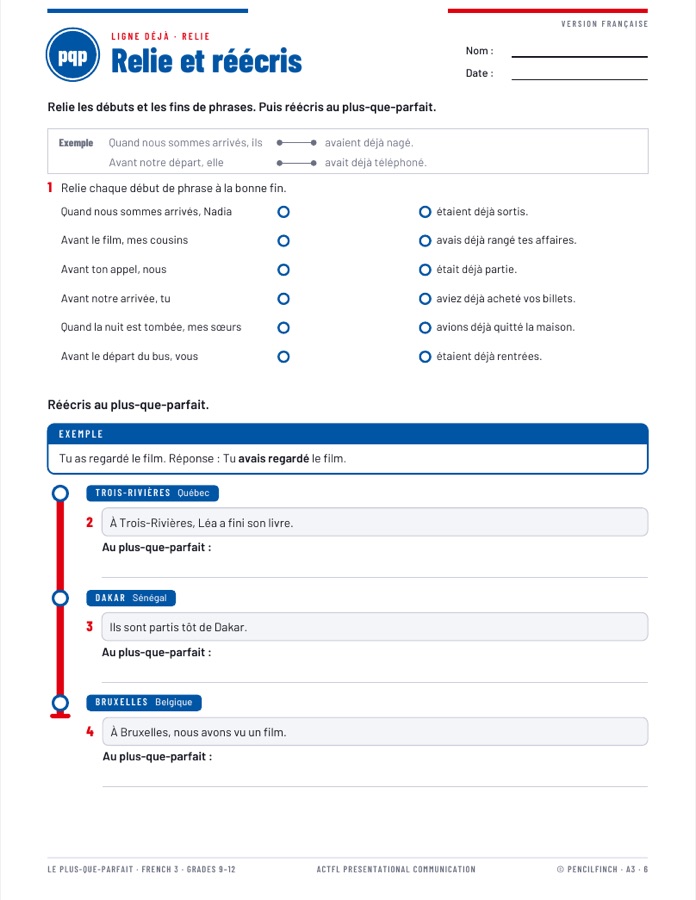
Page 6 of 17 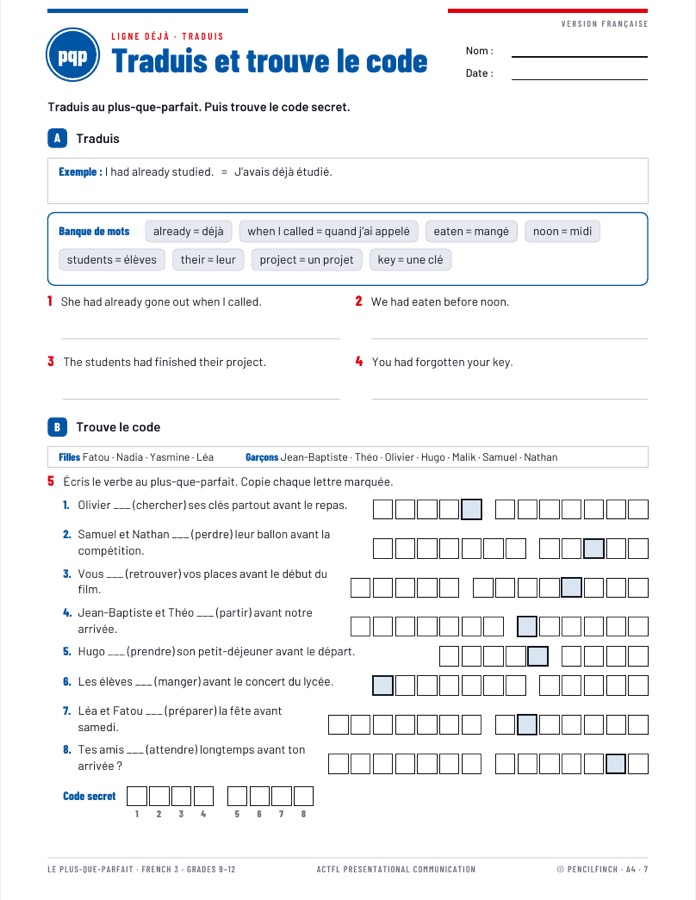
Page 7 of 17
How teachers use it
The plus-que-parfait is the imparfait of avoir or être plus the past participle. The helping verb is the one the verb takes in the passé composé, so a class that knows the passé composé changes only the tense of the helping verb. With être, the participle agrees with the subject, exactly as in the passé composé (Sarah et sa mère étaient montées dans le bus avant nous.).
French uses the tense for the earlier of two past actions; the later one is often in the passé composé (Lucas avait fermé la boutique quand le client a téléphoné.). The chart adds that déjà and ne... pas encore often go with it.
Start with the rule chart (R1) and its passé composé table, then the grid and fill-ins. Every first name in the pack appears in a "who is who" box, so agreement with être never depends on guessing whether a name is a girl’s or a boy’s. The pack leaves some things out on purpose: its teacher page lists no reflexive verbs, no negation and no subjunctive, and the passé composé appears only in context clauses, rewrite prompts and wrong choices.
The Quiz A/B set follows the pack. Its teacher page maps each quiz part to the practice page to reteach, and every quiz sentence is new.
Before and after this topic
The plus-que-parfait is the first French 3 page on this site, so it has no neighbors yet; it builds on the passé composé and the imparfait from French 2.
- Teaching notes for this topicHow to Teach the French Plus-que-parfait (French 3)
- All topics in this lineFrench 3 Worksheets and Quizzes
Common questions
Do students have to choose avoir or être, or is the helping verb given?
They choose. The fill-ins give only the infinitive, and the chart’s note says the helping verb is the same as in the passé composé, with a short list of être verbs as a reminder (aller, arriver, partir, sortir, descendre, rentrer). The quiz’s fill-ins and rewrites score the two parts separately: one point for the helping verb in the imparfait, one for the participle with its agreement.
Does the mystery code catch a wrong helping verb?
Not always, and the teacher page says so. A wrong tense, avoir with partir, or avais for avait changes the length of the row or the shaded letter. The code does not catch être used with an avoir verb, so check helping verbs by eye on that page.
Does the pack use the plus-que-parfait in si clauses or with reflexive verbs?
No. No item in the practice pack or the quiz uses a si clause or a reflexive verb, and neither has a negative sentence. The pack keeps to one use: the earlier of two past actions, with quand, avant and déjà as the usual signals.